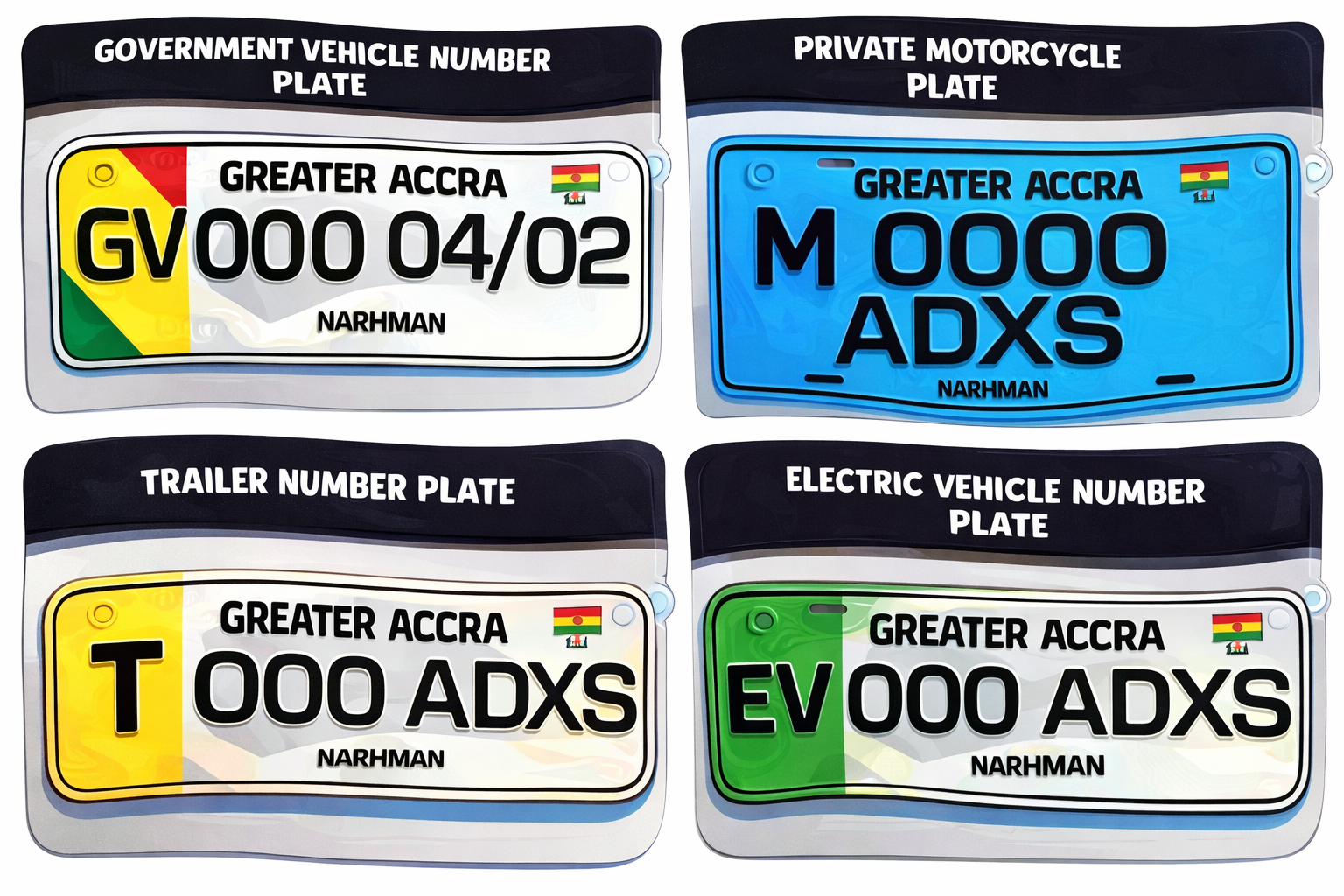
The Vehicle Embossment Association of Ghana has filed an application at the High Court in Accra seeking to restrain the Driver and Vehicle Licensing Authority from rolling out a digital or any new vehicle number plate registration system beginning January 2026.
The suit was filed on December 22 2025 by BEMENCO Embossment Ltd and 26 other companies, all members of the association. The applicants are asking the court to halt the introduction of digitalised vehicle number plates or any alternative registration plates until the substantive case is determined.
They are also seeking an order preventing the DVLA from implementing any new arrangement for the embossment and supply of vehicle number plates outside the existing framework that involves the current licensed embossers.
In court filings, the plaintiffs argue that the DVLA has awarded both the manufacture and embossment of vehicle number plates to a single entity, a move they describe as unprecedented and contrary to long standing practice in the sector.
The association is asking the court to compel the DVLA to continue engaging licensed embossers for 2026 and subsequent years. They are also seeking costs, including legal fees, and any additional relief the court may consider appropriate.
Among the reliefs being sought are declarations that the DVLA’s refusal to allocate blank registration plates for the 2026 production cycle is unlawful and amounts to a breach of contract. The plaintiffs contend that approvals granted by the DVLA, combined with consistent dealings between both parties over more than three decades, created an enforceable contractual relationship.
According to the association, the DVLA has neither revoked nor withdrawn these approvals but has still declined to allocate plates for 2026. They say this has disrupted established production timelines, noting that by this period each year, production for the following year would normally have been completed to ensure a smooth transition.
The plaintiffs further allege that on October 27 2025, the DVLA Chief Executive Officer informed members of the association at a meeting that the authority had awarded the contract for both manufacture and embossment of number plates to one individual, Dr Nyarko Esumadu Appiah of Original Manufacturing and Embossment, also known as Daasebre.
They also claim that the DVLA still owes some members arrears for number plates already produced and supplied under previous arrangements. The association says embossers have historically pre financed the production of plates, with the DVLA selling them before settling payments.
The association argues that the DVLA has not been transparent in its approach to introducing the digital number plates. They say consultations promised by the authority have stalled, despite earlier assurances to work with embossers to prepare for any digital transition.
They further allege that the DVLA did not advertise for tenders or obtain approval from the Public Procurement Authority to sole source the contract, which they say violates the Public Procurement Act. They describe the decision as illegal, discriminatory, and an abuse of administrative authority that overlooks Ghanaian owned companies that have invested heavily in the sector.
The plaintiffs warned that the DVLA’s actions could have serious socio economic consequences. They say members of the association collectively employ more than 3,000 workers across the country and that a sudden disengagement would threaten livelihoods.
They also raised concerns that the public could face delays and inconvenience in vehicle registration at the start of the year if the DVLA is unable to issue number plates due to the injunction.
According to the association, members were required as part of the approval process to acquire specialised embossment equipment that met DVLA specifications, with costs ranging from GHc70,000 to GHc1 million per unit.
The DVLA has not publicly responded to the injunction application. The matter is expected to come before the High Court for determination on whether interim orders will be granted while the substantive case proceeds.