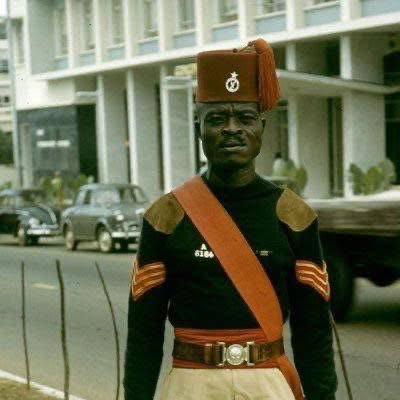
On the morning of January 2, 1964, President Kwame Nkrumah arrived at Flagstaff House, then the seat of government, to begin the day’s work. As he walked within the compound, gunfire erupted at close range. The shots were fired by Seth Ametewee, a serving police constable who was on duty at the time.
According to official accounts from the period and subsequent historical records, Ametewee fired several rounds in the direction of the President. In the moments that followed, Salifu Dagarti, a police officer assigned to the President’s protection, was struck by a bullet. Dagarti died at the scene from his injuries. President Nkrumah was wounded but survived the attack.
There is broad agreement in historical sources that Dagarti was killed while performing his protective duties during the shooting. What remains less clearly documented is the precise sequence of movements in the seconds after the first shot, including who physically subdued the attacker. Some accounts state that Nkrumah sought cover and later assisted in restraining Ametewee with the help of others present. Other records indicate that security personnel intervened immediately after the shots were fired. What is clear is that the assailant was disarmed and taken into custody at Flagstaff House.
Seth Ametewee was later tried and convicted for his role in the assassination attempt. Court records from the era show that he was sentenced to death. The motive officially attributed to him was personal grievance, though the broader political climate at the time was tense, marked by earlier assassination attempts and growing opposition to Nkrumah’s government.
Salifu Dagarti’s background is partly documented in police records and secondary historical sources. He joined the Gold Coast Police as a teenager and received professional training during the late colonial period. By the early years of Ghana’s independence, he had been selected to serve on the presidential security detail. His exact rank at the time of his death is not consistently stated across sources, though he was a senior non-commissioned officer rather than a commissioned police superintendent.
Dagarti’s death had immediate consequences for national security policy. Following the attack, the government tightened security around the presidency and expanded intelligence and protective services. The incident also reinforced the sense of vulnerability surrounding the Nkrumah administration during its later years.
Today, Salifu Dagarti is remembered in limited but significant ways, including the naming of a street in Tema Community 2. His role in the events of January 2, 1964, is recorded in Ghana’s political history as that of a police officer who died in the line of duty during an attempt on the life of the country’s first President.
More than sixty years on, the shooting at Flagstaff House remains a reference point in discussions about political violence, loyalty within the security services, and the personal risks borne by those assigned to protect national leaders.