A decision by the Ghana Maritime Authority to waive close to one million United States dollars in statutory penalties imposed on a vessel has triggered concern within Ghana’s maritime sector, with industry players questioning whether enforcement rules are being applied consistently and transparently.
The vessel at the centre of the controversy, MV Sankofa, was arrested by the Ghana Navy on July 18, 2025, during a routine patrol south of Axim in the Western Region. Navy sources say the vessel was subsequently handed over to the Ghana Maritime Authority for a full Port State Control inspection, the process used internationally to assess compliance with maritime safety, labour, and environmental standards.
According to inspection records cited by industry sources, the vessel was found with nine major deficiencies. These included suspected illegal commercial activity within Ghana’s territorial waters, questions over the authenticity of registration documents, crew members allegedly operating without valid certificates, and multiple pollution-control failures. On the basis of these findings, the vessel was classified as substandard and detained.
The Ghana Maritime Authority imposed total penalties amounting to about $1,058,000, in addition to GH¢154,800 in statutory charges. Documents reviewed by industry players indicate that approximately $1 million of the penalty related specifically to the alleged illegal trading activity, one of the most serious breaches under maritime enforcement rules.
Records further show that the vessel’s owners, Atlantic Factorial Company Limited, applied for a waiver of the penalties. While a later request for a waiver was formally rejected in a letter dated October 28, 2025, that same correspondence did not explain why nearly $1 million had already been removed from the original penalty assessment.
The lack of documentation has become a central issue. Industry sources say internal Ghana Maritime Authority policy requires written justification for enforcement decisions, particularly where penalties are reduced or waived, to ensure transparency and allow for audit and legal review. In this case, no such written record has been disclosed.
Speaking publicly, Captain Derrick Attachie, Acting Director of Technical at the Authority, confirmed that the waiver was not documented. He stated that the $1 million charge was linked solely to the suspicion of illegal trading and that further investigations meant the allegation could not be sustained. He added that the Authority deliberately chose not to issue a letter explaining the waiver, saying it would not have been appropriate to do so.
That explanation has not satisfied critics within the maritime community. Several compliance specialists have warned that undocumented enforcement decisions depart from international best practice and could weaken Ghana’s standing under regional port state control arrangements. Some navy officers and industry insiders have described the waiver as highly irregular, noting that penalties of such scale are rarely withdrawn without a clear paper trail.
A senior naval officer, speaking on condition of anonymity, said the concern was not simply that a charge was dropped, but that the state lost a significant amount of revenue without a documented explanation. He said enforcement decisions are expected to be traceable, particularly where public funds are involved.
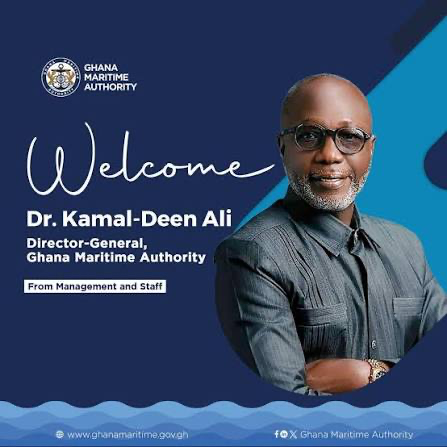
The controversy has also drawn attention to leadership at the Authority under Kamal-Deen Ali, whose tenure has coincided with increased scrutiny from some industry actors and civil society groups. While there is no evidence publicly presented that corruption occurred in this case, observers say the lack of transparency has created room for suspicion.
As of now, the Ghana Maritime Authority has not released detailed findings from its further investigation into the alleged illegal trading activity, nor has it published a formal explanation for the waiver. Civil society organisations are reportedly preparing petitions calling for an independent review of the decision and of broader enforcement practices at the Authority.
No wrongdoing has been legally established against any individual or institution in relation to the MV Sankofa case. However, maritime experts warn that unless clearer explanations are provided, the episode risks damaging confidence in Ghana’s regulatory framework and commitment to transparent maritime governance.